


Field initialization in Dart happens in several ways, but one of the more controlled options involves the late modifier. Declaring a variable as late delays its setup until the first time it’s accessed, which helps manage heavy initialization work, circular references, and nullable fields with more precision. This behavior changes how Dart handles memory and initialization checks inside classes, giving developers tighter control over timing while keeping type safety in place.
How Late Works in Class Initialization
Late variables in Dart give developers precise control over when a field is set, which matters most when initialization depends on external factors or heavier setup work. During normal object creation, Dart expects all non-nullable fields to be initialized right away. That rule prevents null-related bugs but can get in the way when a value isn’t available at construction time. Declaring a field as late tells the Dart compiler that it will be initialized later, so it doesn’t need a value at creation. This shift changes how Dart tracks memory and execution flow, making field setup more flexible without removing type checks.
Delayed Initialization Behavior
A late field starts its life uninitialized, waiting for assignment. It still exists as part of the object’s memory, but no value is stored until something writes to it. When the field is accessed before that assignment, Dart throws a LateInitializationError. That safety net keeps code predictable by making sure that every access happens after initialization.
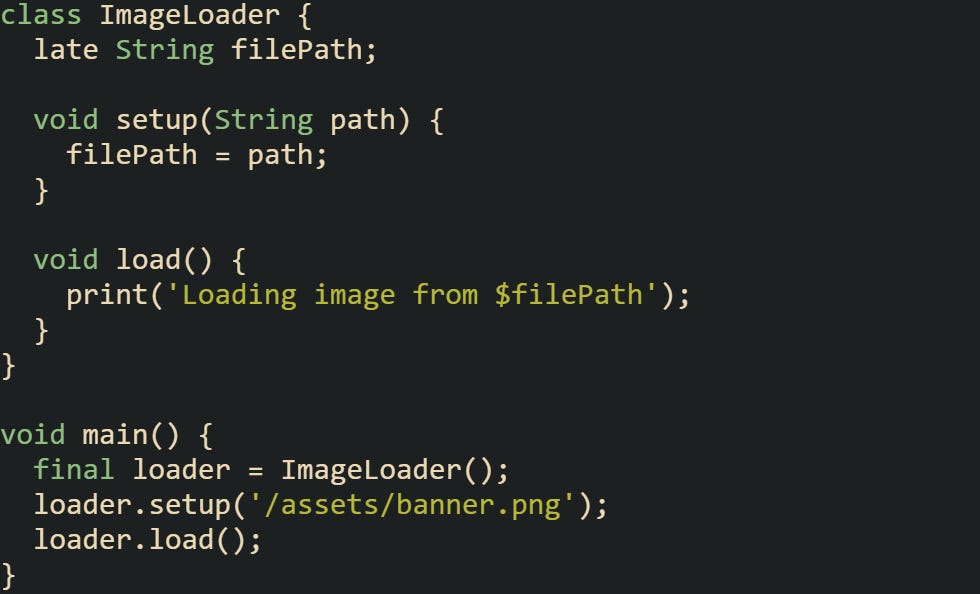
In this example, the filePath variable becomes valid only after setup() assigns it. Accessing filePath before calling setup() would stop execution with a runtime error. The flexibility helps with configurations or dependencies that arrive later, such as user-selected paths or data fetched after startup.
A late field can be reassigned multiple times unless marked as final. That distinction matters for classes that hold mutable runtime data. If a field is marked late final, it can only be assigned once, and any future write attempts will fail.
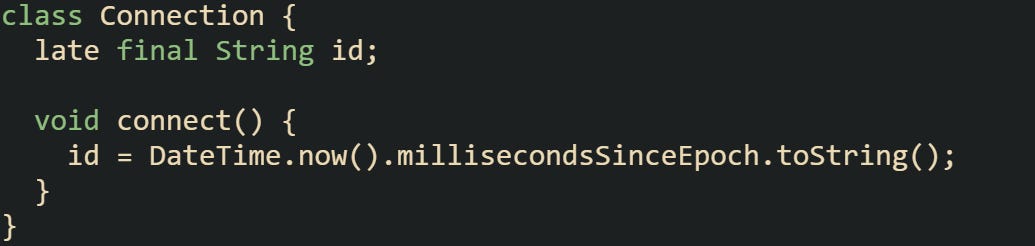
The id here represents a session identifier that’s set exactly once, which aligns naturally with how late final is meant to behave.
Lazy Initialization Mechanics
When a late final variable includes an initializer, Dart defers running that expression until the first access. The difference between this and a regular late declaration is that the former doesn’t need manual assignment. Instead, the compiler sets up an internal flag that runs the initializer lazily, only when required.
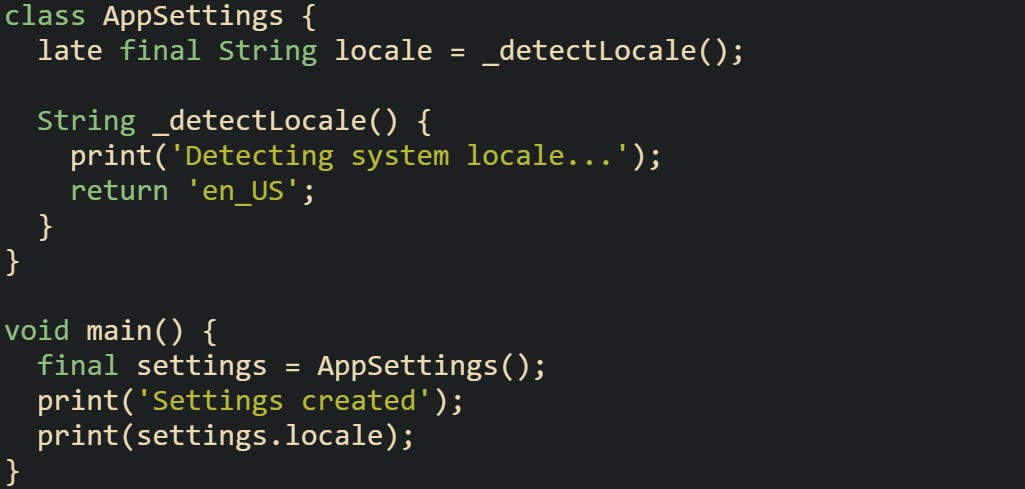
The output first prints “Settings created” and only then “Detecting system locale…”. That order shows how Dart delays running _detectLocale() until locale is read. If the property is never accessed, no work happens. This small optimization helps when a field’s setup is expensive and not always needed.
Lazy initialization can also help avoid circular dependencies between objects. For example, if one class depends on another that depends back on the first, late final with an initializer gives both a safe delay before full construction.
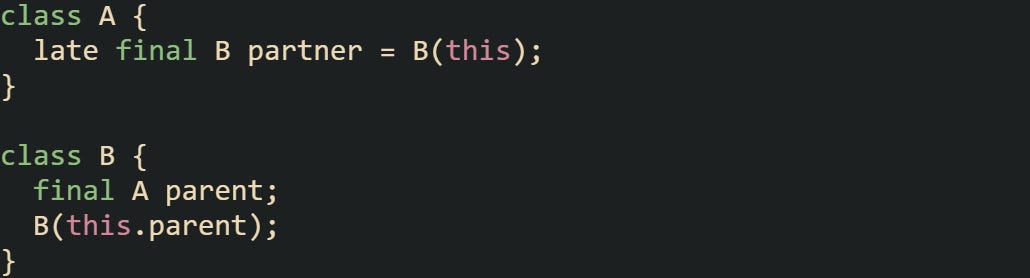
Without late, this pattern can still compile, but it constructs the partner eagerly during object creation and passes this before the object is fully initialized, which can lead to order-of-initialization bugs or recursion. Marking partner as late final defers creation until first read, avoiding eager construction and helping break cycles.
Field Order During Construction
Dart runs field initializations before the constructor body. For regular variables, this means the order they’re declared in determines when they’re set up. When a field is marked as late, it skips that early initialization step and remains empty until it’s manually assigned or its lazy initializer runs. That order can affect runtime behavior in subtle ways.
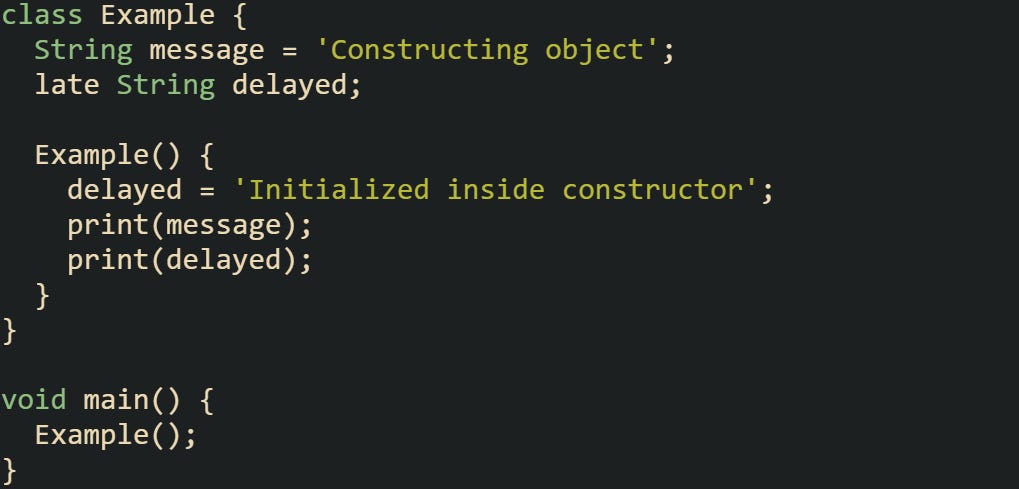
Both fields exist at allocation time, but only message gets its value right away. The delayed variable stays empty until the constructor assigns it. This distinction becomes clearer when constructor logic interacts with methods that use late variables too early.
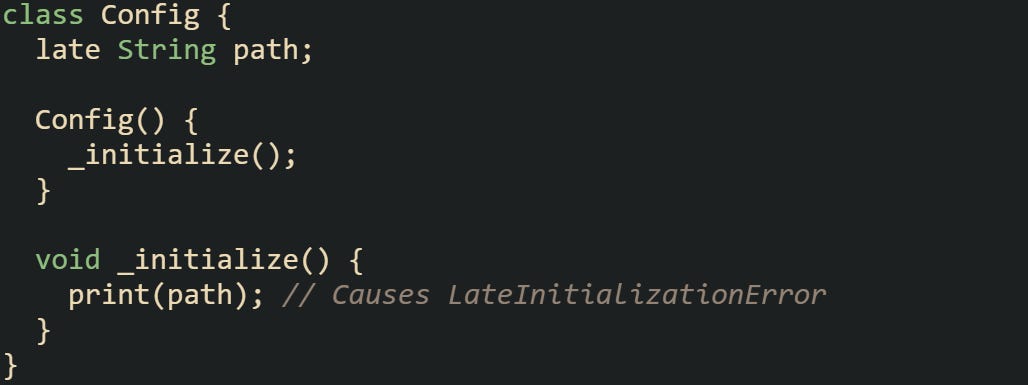
That fails at runtime because _initialize() reads path before it’s written. Reordering those calls or assigning path first fixes the issue.
Late variables also play a role when inheritance or mixins are involved. If a subclass accesses a late field declared in a superclass before assignment, the same runtime error appears. It’s easy to forget when extending classes that rely on deferred fields, so assigning early in constructors helps avoid surprises.
Late Variables and Nullability
Null safety in Dart changes how developers can think about when and how variables are set. A variable can either hold a value or be marked as nullable to allow null. When late enters that equation, it adds a timing factor. It tells Dart that a value will arrive later, which affects both non-nullable and nullable fields differently. The timing of assignment, the type declaration, and the order of access all matter in how Dart enforces runtime safety.
Working with Nullable Fields
A nullable variable is one that accepts null as a valid value. Normally, if a class declares a nullable field without late, Dart initializes it with null right away. Adding late changes that. The variable still accepts null, but Dart won’t initialize it until a value is explicitly written. Until that moment, the variable technically exists but has no stored value. Trying to access it before assignment leads to a LateInitializationError, even though its type includes null.
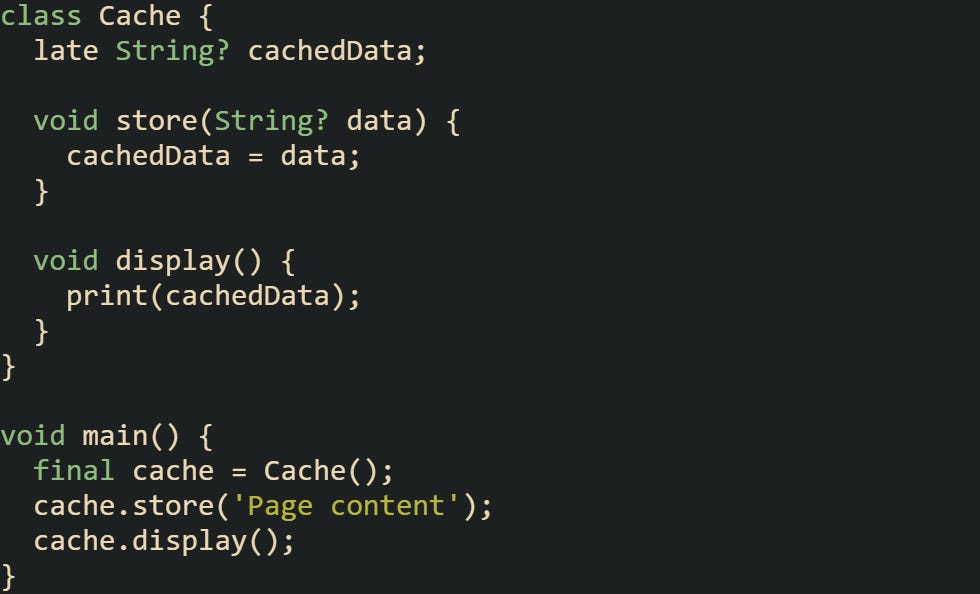
If display() runs before store(), Dart throws an error instead of printing null. The late modifier overrides the default null initialization behavior because it treats the field as intentionally delayed. That helps avoid silent errors where a developer assumes a field has been set when it hasn’t.
There are also cases where a nullable late field helps control access flow in more complex logic. Imagine a web session that might store user information temporarily.
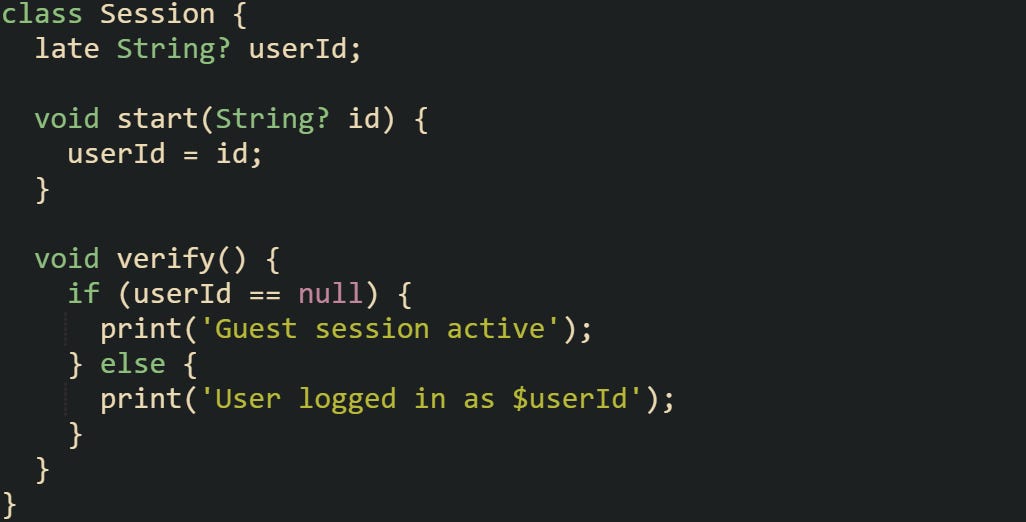
The late declaration means userId can’t be accessed before setup, even though it can later hold null. That helps code fail early when initialization hasn’t occurred, rather than silently passing a null check.
Late with Non-Nullable Types
Non-nullable fields normally require an initial value either directly in the declaration or through a constructor. Without late, Dart refuses to compile such a class if a field doesn’t have a value at creation. The late keyword loosens that rule by telling the compiler the field will get its value before any access happens.
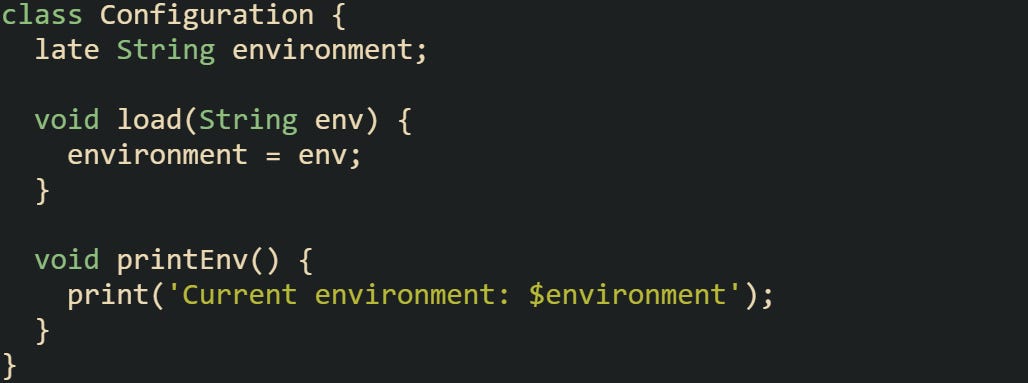
The field environment can’t be read until load() runs. If printEnv() executes first, Dart throws a runtime error. That difference matters because non-nullable fields without late are guaranteed safe at compile time, while late fields rely on runtime checks.
Late fields also help with circular or dependent initialization. For instance, one object might depend on data from another that hasn’t finished building. Without late, developers would be forced to use nullable types or redesign the structure.
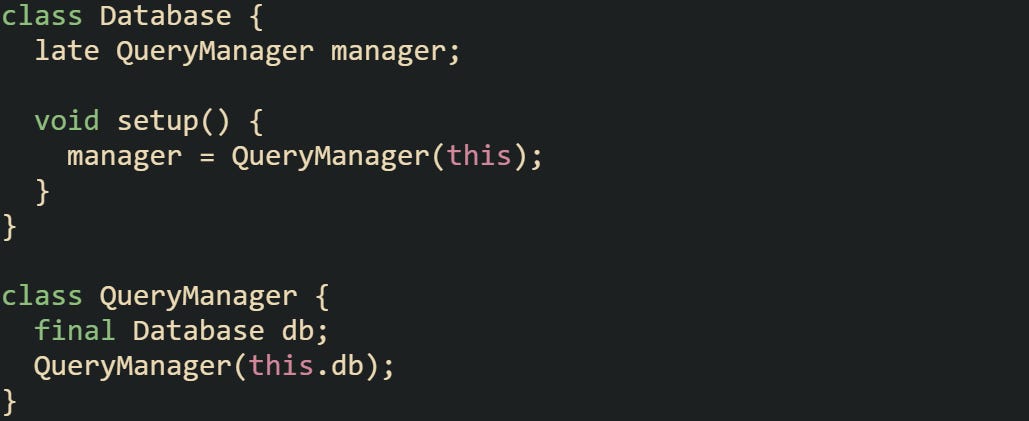
The Database and QueryManager classes depend on each other. The use of late keeps both non-nullable while allowing setup to complete in two stages. It maintains type safety while avoiding nullable overhead.
A related use case involves late fields that must exist but aren’t ready at construction. An example would be a configuration that’s loaded asynchronously.
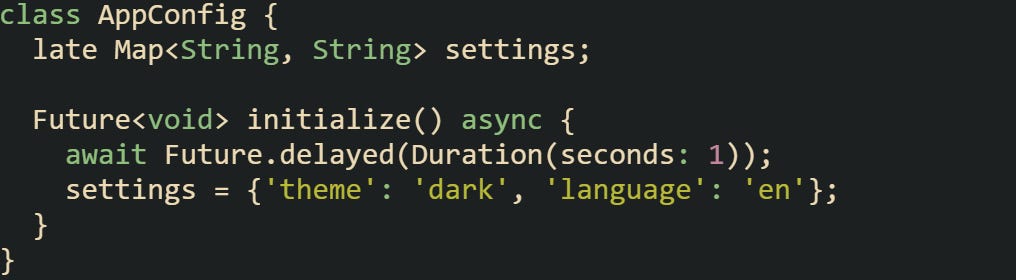
That delayed loading pairs naturally with late because it declares intent to fill in the value after startup. Without it, you’d be forced to make settings nullable, which adds more null checks later.
Common Error Cases
Late variables create runtime safety by enforcing strict access order. The most common mistake happens when a late field is read before assignment. Dart throws a LateInitializationError, which halts execution immediately. This often happens when initialization logic is split across methods or constructors without careful sequencing.
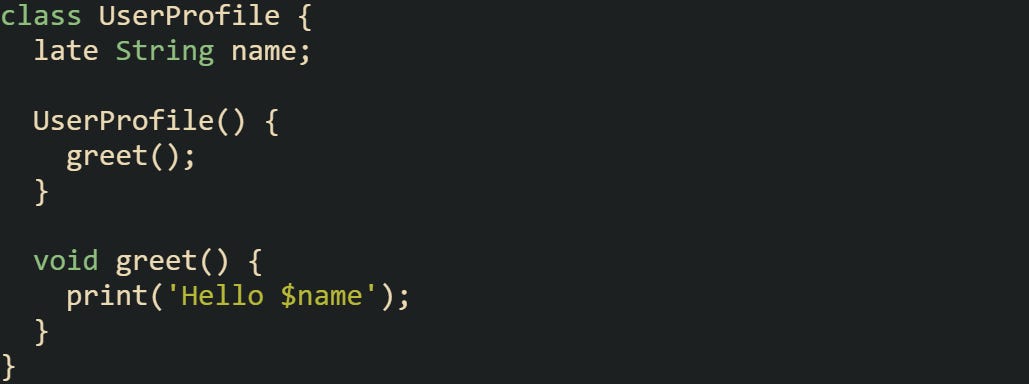
That class fails because greet() runs before name has a value. Moving the greeting call after the assignment resolves the problem.
A subtler case appears with getters that reference late fields indirectly.
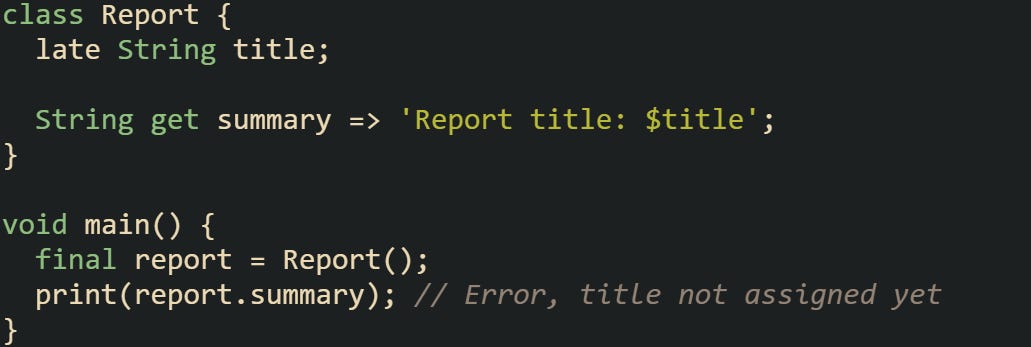
Even though summary looks harmless, it triggers the same late access rule because it reads title. Dart treats every access, whether direct or through a getter, the same way.
Another common trap involves late final fields that hold computed values. Because they initialize lazily, any internal dependency that reads another uninitialized field will trigger an error.

When Dart tries to evaluate directory, fileName has no value yet. Swapping their order or moving the computation into a method fixes that.
Late variables are helpful when used thoughtfully, but they come with a responsibility to manage access order carefully. Each declaration introduces a small runtime rule that must be followed: assign first, read second. Misplacing that order doesn’t break compilation but leads to immediate runtime errors, which can make debugging tricky without awareness of the timing behind those fields.
Conclusion
Late variables change how Dart handles field timing by separating object creation from value assignment. They give developers room to decide when a field should be set without losing type safety. Each late declaration tells Dart that a value will arrive later, and the runtime enforces that rule with precision. This affects both nullable and non-nullable types by moving some checks from compile time to runtime, which helps when data depends on other parts of the system. When used with care, late fields keep memory use predictable while giving just enough control to handle delayed initialization in a practical way.