


Good control over how values behave can come from operator methods, and extension methods give you room to add those operators to types you don’t own. This lets arithmetic style behavior or custom comparison rules fit naturally without touching the original class. Files can place an extension around a type, add a few operator methods, and bring in new expressiveness that stays easy to read. That separation between the original type and the extra behavior helps when you work across packages or build utility features that sit across a large codebase.
How Operator Methods Function In Extensions
Operator features added through extensions give Dart a flexible way to express small bits of behavior without changing the core type. The language handles these calls with steady rules that tie them to the static type of the receiver, which keeps the meaning of an operator call familiar to anyone reading the file. An extension can bring in arithmetic, comparison shortcuts, or a custom indexing feel, all while keeping the original class focused on what it already does.
How Dart Picks Operator Methods
Dart resolves operator calls with a static view of the receiver’s type. That means the compiler looks at the declared type of the expression and selects the extension that fits those constraints. This keeps calls stable and avoids surprises from runtime changes. When an extension applies, the operator call is treated no differently than a normal method call, except the syntax reads tighter.
We can see this in a small example:
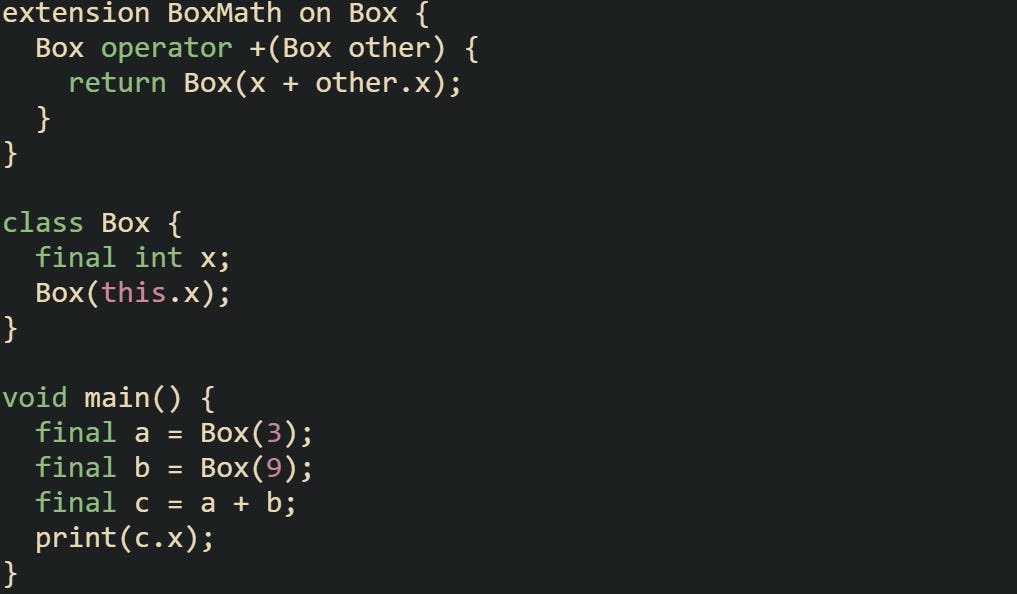
The operator call routes straight through the extension, and nothing inside Box needed to change. Someone scanning the import list can spot that the extension is active. That behavior keeps the call predictable for anyone reading the file.
In this next example, we can see how static type shapes the operator call. A variable typed as a superclass or interface won’t see an extension built for a more specific type.
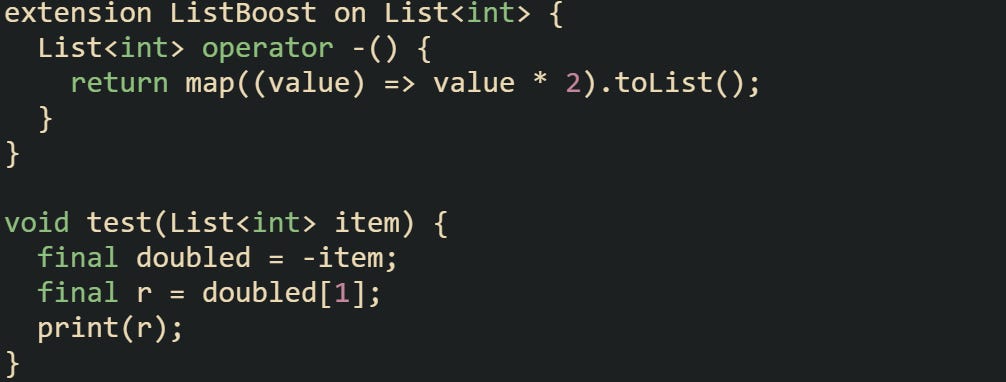
This still binds at compile time. If a variable is declared with a type that does not match the on List<int> constraint, the extension operator is not available and the code fails to compile instead of silently falling back to a different implementation.
Constraints Extensions Must Follow
Dart extensions can add operators, but the language keeps the rules strict. Only the built in operator names are allowed, so an extension can’t invent brand new symbols. It also can’t slip past the boundary of access control. Private fields in the target type stay private, and an operator method in an extension must work with public state or helper values stored inside the extension itself.
Custom wrapper types can surface a public field, but the extension can’t reach private ones.
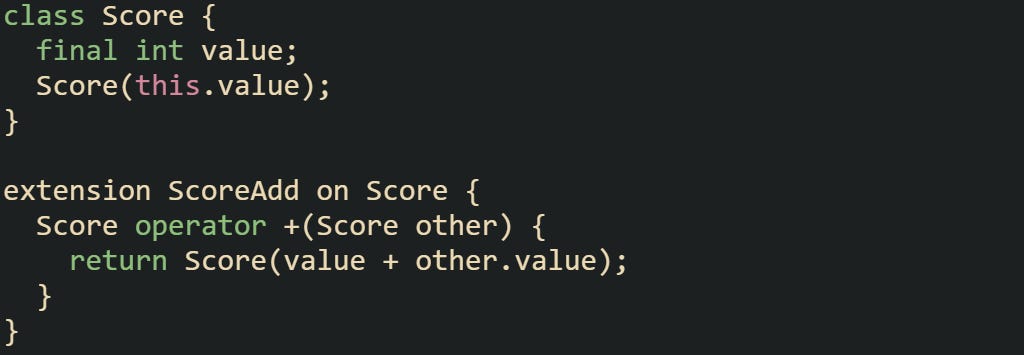
The operator stays within safe limits because it only relies on what the type already exposes. This makes the behavior easy to track as the project grows.
Some operators also pull in constraints around return types. Dart doesn’t restrict you to returning the same type you received, but the intent needs to make sense. If an operator produces a new kind of wrapper or a special computed result, that return type should come through in the method signature. That clarity helps anyone reading the extension understand how values travel across the call.
How Dart Resolves Conflicts
Two different extensions that both apply to the same static type create a conflict. Dart avoids silent guesses and instead produces a compile time error when it can’t decide which operator to call. This keeps the behavior steady and avoids hidden surprises in large codebases.
Targeted override solves this when you want to control the call precisely.
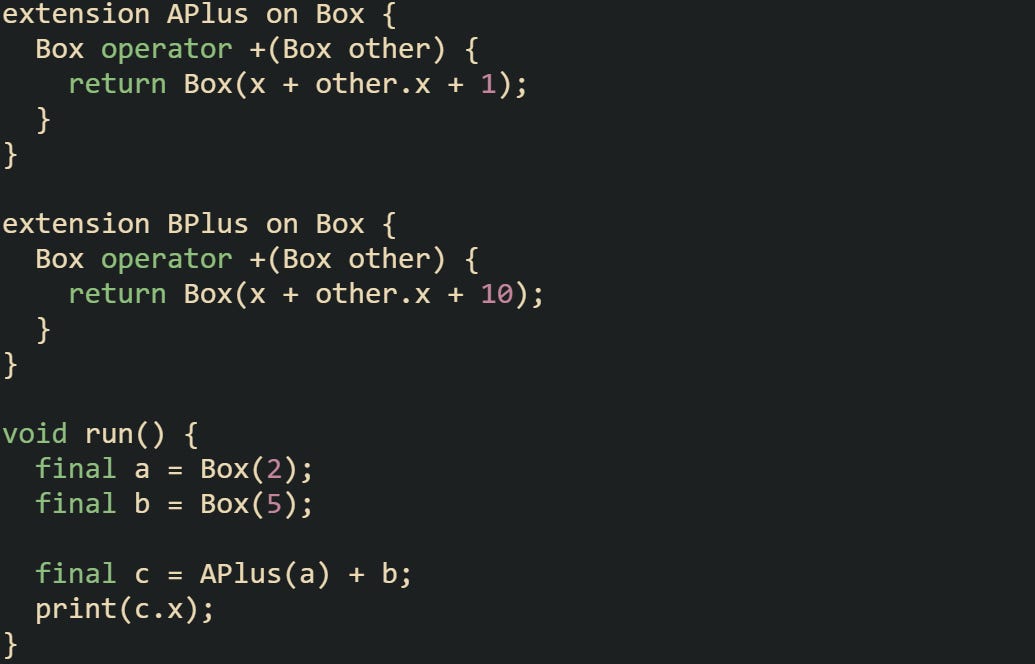
The override syntax puts the call in plain view. It’s easy to see which extension controls the operator for that expression, and anyone reading the file understands the intention immediately.
Building Extensions That Use Operators Well
Good operator extensions work best when they sit naturally with the type they target. Goal is to add a small bit of expressive syntax without pulling attention away from the meaning of the code. Reader should feel that the operator belongs there, and the extension should stay focused on one family of behavior so its purpose comes through without strain.
Creating Operators That Stay Predictable
Readers usually read an operator call faster than a method call, so the intent behind the operator has to land without forcing someone to wonder what the code is doing. When an extension adds arithmetic or comparison features, it helps when the operator acts in a way that fits the mental model someone already has for that type.
Take a two dimensional point. Anyone glancing at it expects plus to combine coordinates in a way that mirrors basic vector addition.
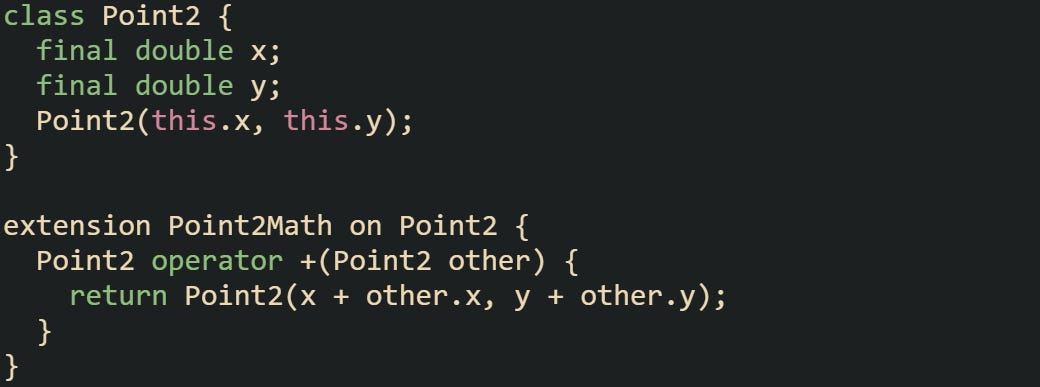
A call like p + q feels natural because the extension follows a pattern that many developers already connect with points. Readers don’t have to pause to untangle what the operator is doing.
Some types fit operator extensions only in narrow situations. A date span, for instance, may gain clarity from an operator that moves the span forward by a number of days when the meaning is consistent in the project.
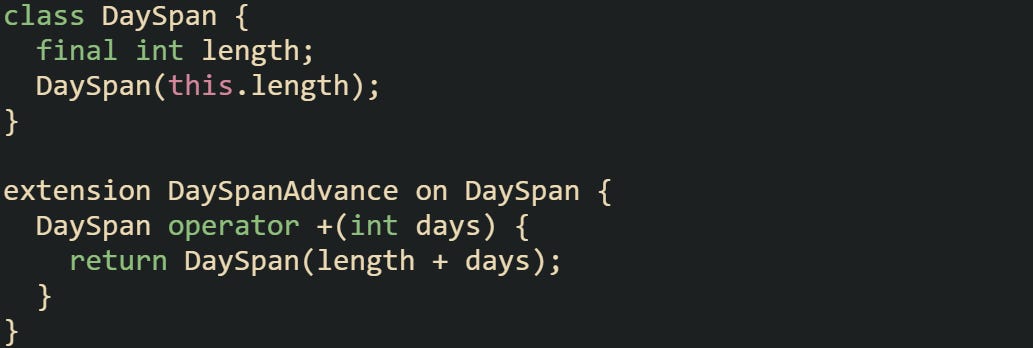
This expands the expressiveness of the type without rewriting its core structure.
How Extensions Affect Type Boundaries
Extension code works outside the class it enhances. That separation protects the original type from drifting away from its purpose. Operator methods placed in extensions let you bring in small arithmetic or comparison elements without asking the class itself to cover those responsibilities. Wrapper classes that store a measurement are a good place to add this kind of operator behavior.
The type stays focused on housing a single value and basic metadata. The extension can hold the arithmetic.
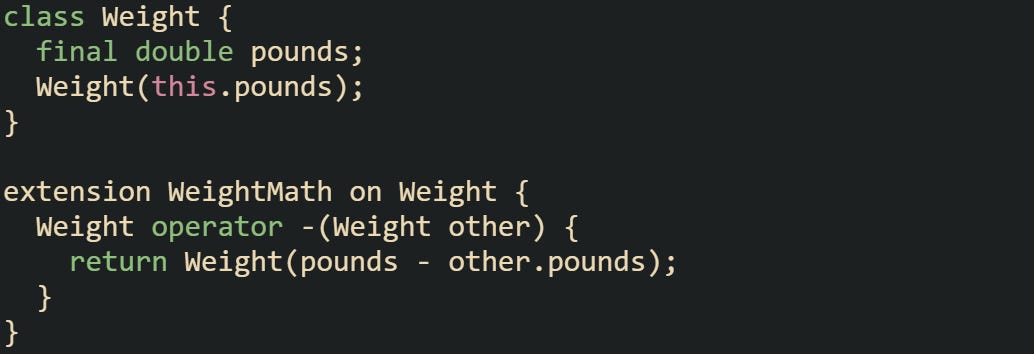
Projects that rely on packages with sealed or external classes can gain arithmetic behavior without altering the package source. That gives your file control over expressive code while leaving the upstream class untouched.
Type boundaries also matter when two different code areas build their own operator extensions. Developers working on separate features may introduce different operator meanings for the same type, and those overlaps can confuse readers long after the code has shipped. Good safeguard is to keep operator extensions scoped to the files that need them or bundled in a utility library with a single purpose so developers know exactly what behavior they’re pulling in.
Wrapper around a small two field record can also benefit from operators while staying lightweight. Extension keeps the arithmetic readable.
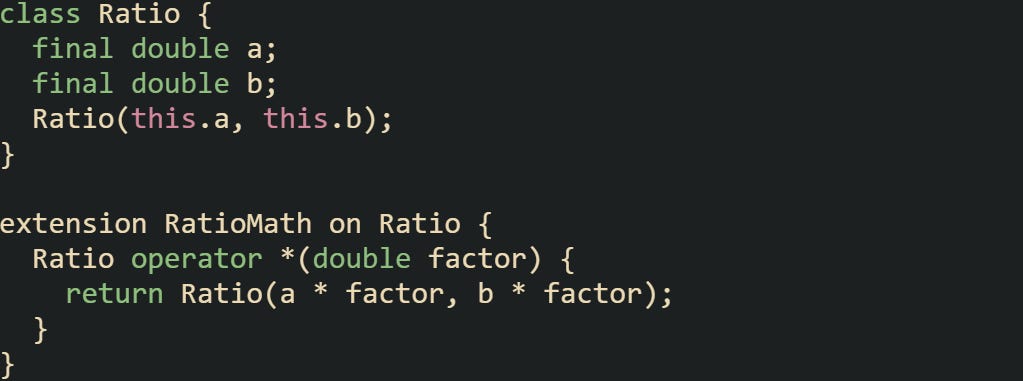
Single extension like this keeps the concept of scaling a ratio grounded without bloating the class.
Impact On Readability In Larger Codebases
Operators can feel smooth in math heavy sections of a project, but they can also hide significant work behind small symbols. An extension can magnify that impact because the code offering the operator isn’t always visible near the call site. Readers may need to search imports to find where the operator lives, and that extra step can slow their reading flow if the extension isn’t clearly scoped.
Numeric wrapper types can pick up operator overloads that make everyday math clearer, but only if the intent is natural for the domain. Wrong operator can push the type away from its intended meaning. Good practice is to build operator extensions around types that already feel mathematical or relational.
One case where operator extensions shine is a vector or offset structure in UI work. The operator mirrors the spatial idea without much ceremony.
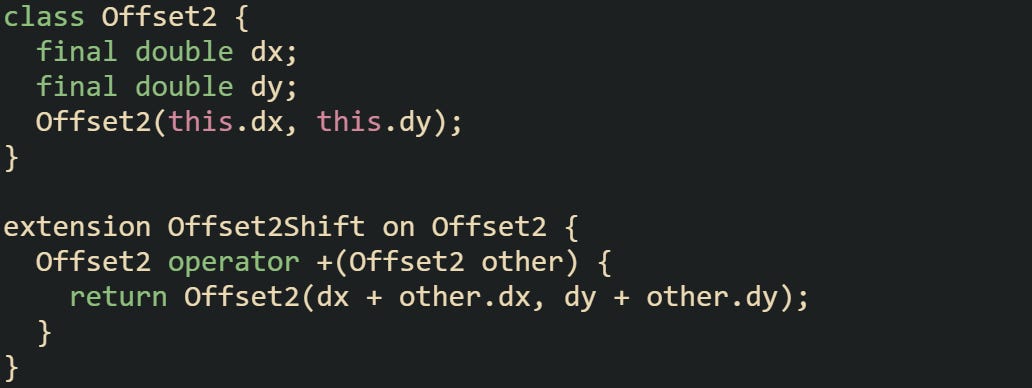
This reads comfortably because it matches movement math people use every day.
Another area where extensions need careful thought is numeric wrappers tied to business data. A currency type, for instance, can support plus or minus in a limited way, but overwriting other operators may pull readers off track because the domain carries rules that can complicate arithmetic. Good judgment helps keep the extension aligned with concrete expectations.
Longer projects sometimes collect dozens of extensions that operate on the same model classes. If multiple files add operators to those classes, switching between files can become tiring for someone new to the code. Scoping extensions in feature specific folders or limiting them to utility locations helps keep the flow manageable.
Boolean style wrappers can also surface an operator in a way that stays readable when the intent fits the domain. Small wrappers that track a permission state can support a merge step that joins two values into one outcome without clouding the type itself.
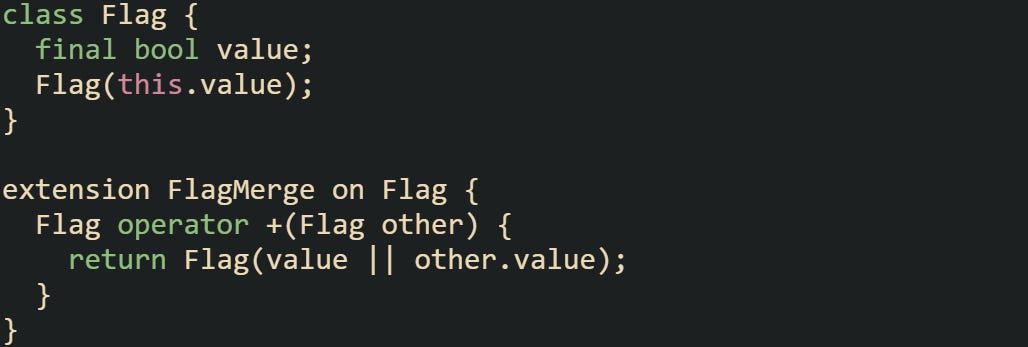
A small example of a custom offset type that benefits from an operator complements this:
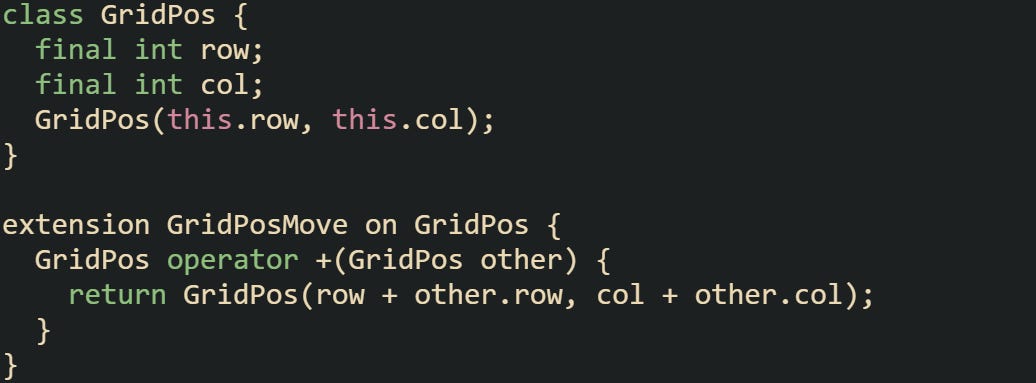
Clear names and a natural use case make the operator more grounded.
Conclusion
Operator extensions give you a practical way to guide how values move through your code without placing extra weight on the original types. Dart’s rules around static types, conflict checks, and allowed operator names keep the mechanics steady, which helps these additions stay predictable as a project grows. When an operator lines up with the natural meaning of a type, the extension can bring a smoother feel to your files and let you express intent with less noise while keeping the structure of the original class intact.