
A common question about Java is why people call it platform independent. The phrase “write once run anywhere” gives a quick label to the idea, but what makes that possible runs deeper than the language itself. It depends on how code is compiled into bytecode and then handled by the Java Virtual Machine, with support from the JRE and JDK. Together they put a layer between source code and the details of any specific operating system or hardware.
The reason this works is that Java doesn’t tie code to one system at compile time. Instead, it compiles into bytecode that’s neutral and portable. The JVM then translates that bytecode into native instructions suited to whatever machine it runs on. With the JRE providing a standard set of libraries and the JDK supplying developer tools, Java maintains a consistent environment across different platforms.
How Java Source Becomes Bytecode
Java starts with human-readable source files ending in .java. These files don’t run directly on any machine. They must first pass through the Java compiler, a tool named javac that comes with the JDK. The compiler translates each class into bytecode and writes it into .class files. Bytecode is a set of instructions that’s the same across every platform, which makes it portable.
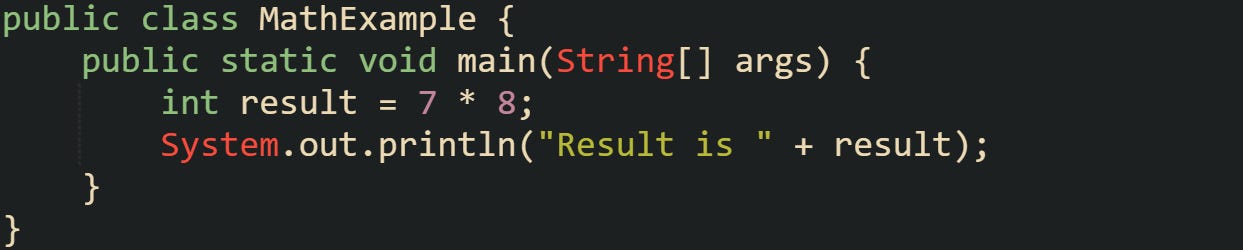
Compiling this file with javac MathExample.java creates MathExample.class. If you open that .class file in a hex viewer, you’d see a binary format that follows the JVM specification, not machine instructions for Windows or Linux. That separation is what lets the same compiled file travel between systems.
The JVM Translation Work
The JVM is the piece that takes bytecode and turns it into something the local machine can run. It understands the structure of .class files, checks their validity, and executes the instructions step by step. Many JVMs rely on a mix of interpretation and Just-In-Time compilation. Interpretation walks bytecode one instruction at a time, while JIT identifies hot spots in the code and compiles those into native machine instructions for speed.
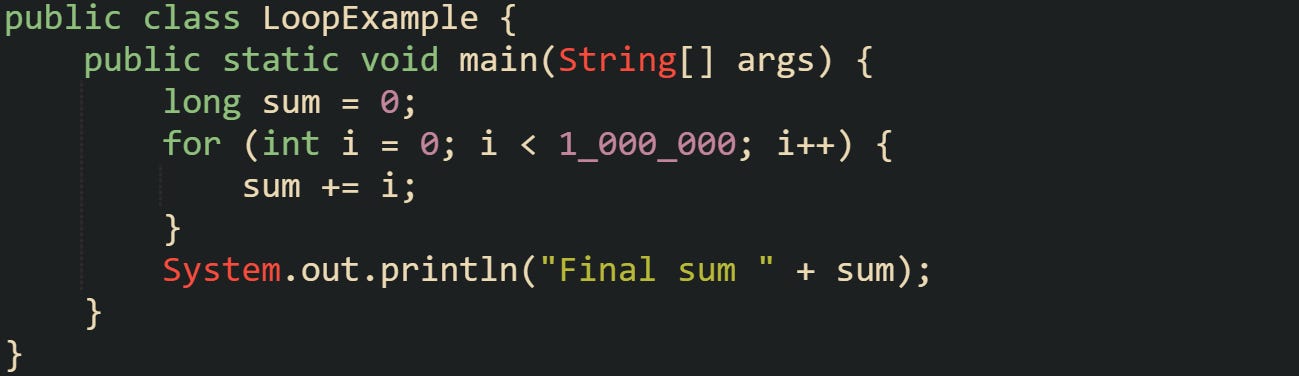
A loop like this often triggers the JIT compiler because it runs many times. The JVM translates it into efficient native instructions so it runs faster on the host system. This process is invisible to the developer but it’s a major part of how Java can run the same bytecode across different machines while still delivering speed.
The JRE Support
Running Java code requires more than just the JVM. Programs depend on libraries that handle input, networking, collections, text processing, and a wide range of other tasks. The Java Runtime Environment brings these libraries together along with the JVM so bytecode can rely on a consistent set of tools.
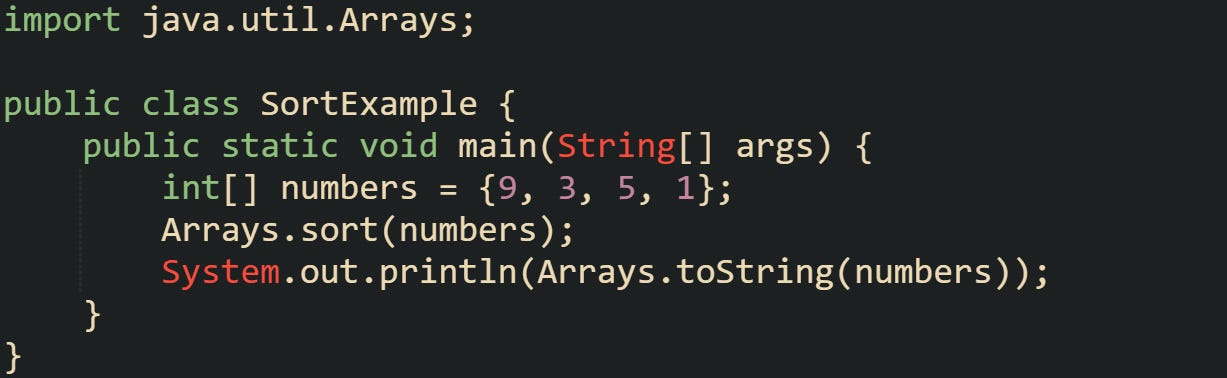
Sorting arrays is not something the JVM itself provides directly. It comes from the standard library that ships with the JRE. This means the same call to Arrays.sort produces the same behavior regardless of platform, helping keep Java consistent across systems.
The JDK Tools
While the JRE is enough to run applications, developers need more to write and build them. That’s where the JDK comes in. It contains the compiler, documentation generator, debugging tools, and other utilities. These tools don’t affect how bytecode runs but they’re what make it possible to produce bytecode in the first place.

Compiling with javac Greeting.java and running with java Greeting Alex produces Hello Alex. Without the compiler from the JDK, the .java file would stay as text forever. Developers use the JDK for debugging, profiling, and packaging. To run the program, a Java runtime is required, provided by the java command that ships with the JDK or by a runtime image bundled with the app. Many modern distributions do not ship a separate JRE installer.
Why This Model Works Across Platforms
Platform independence comes from this separation of work. The compiler transforms source into bytecode once, the JVM translates that neutral bytecode into native instructions on demand, and the JRE provides a consistent set of libraries across systems. Developers create their work with the JDK, while end users only need a JVM and JRE for execution. These layers combine so a .class file built on one system can run on another without changes, as long as a JVM exists for that target.